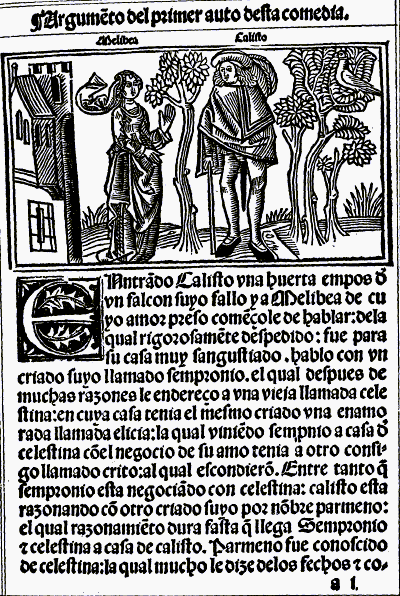
Celestina
Historical moment: the Catholic Kings (political, social and religious unification of Spain), the Inquisition, end of the "Reconquest", Discovery of the Americas, Humanism, the printing press, the conversos; Nebrija and his Gramática of Spanish; popularity of the books of chivalry
Dates of Celestina and Textual History
Comedia de Calisto y Melibea (Burgos, 1499) 16 acts
2nd edition (Toledo, 1500) 16 autos. Added materials at the beginning and end, "Letter to a friend" and acrostic verses spelling the name "Fernando de Rojas".
Tragicomedia de Calisto y Melibea (Zaragoza, 1507) 21 autos: "Tratado de Centurio" 5 acts inserted between the 14th and the 19th acts of the primitive version of 16 acts. Prologue, Rojas' comments and the ending verses of Alonso de Proaza all added.
Celestina (1518-1520, change of title due to printers and popularity of Celestina)
Different versiones with different acts developed from 16>21 acts
Autor(es): First Act and beginning of Second are anonymous (Rodrigo Cota, Juan de Mena or another); thel second author is Fernando de Rojas, of Jewish origen (converso), he was studying law in Salamanca when he found the anonymous acts and continued them according to his prologue
Titles: Comedia>Tragicomedia>Celestina
Genre: Novel in dialogue or theatre
Influences: Humanistic comedy, Sentimental novel, Song books
Style of Celestina: language: use of asides, refrains, proverbs and sayings, dialogue, awareness of language and change of register; classical images and allusions (Nero's fire, the Trojan War); symbols: the falcon, el cordón de Melibea, the walls); irony, multi-perspectivism; pessimistic tone
Themes: love and its consequences, death, avarice, magic, psychology (motives, how characters manipulate others), problem of space and time, memory, life as a battle, enclosure of women; tensions between the noble and lower classes; appearance vs reality; conception of honor
Summary of some of the major Medieval and Renaissance elements:
Realism/Idealism
Lower Appetites/Refined sentiment
Noble class/lower class
Popular/Learned language
Medieval Influences: courtly love, passion as a destructive force, the go-between, sense of sin, witchcraft
Rennaisance: glorification of illicit love, interest in language, psychology, classical references and illusions, social changes
Characters (tragic figures or deserving of punishment?)