|
1
|
|
|
2
|
|
|
3
|
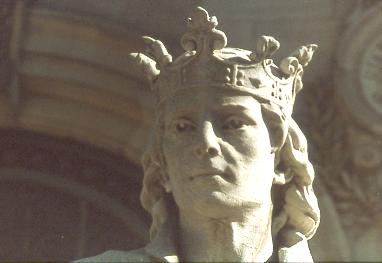
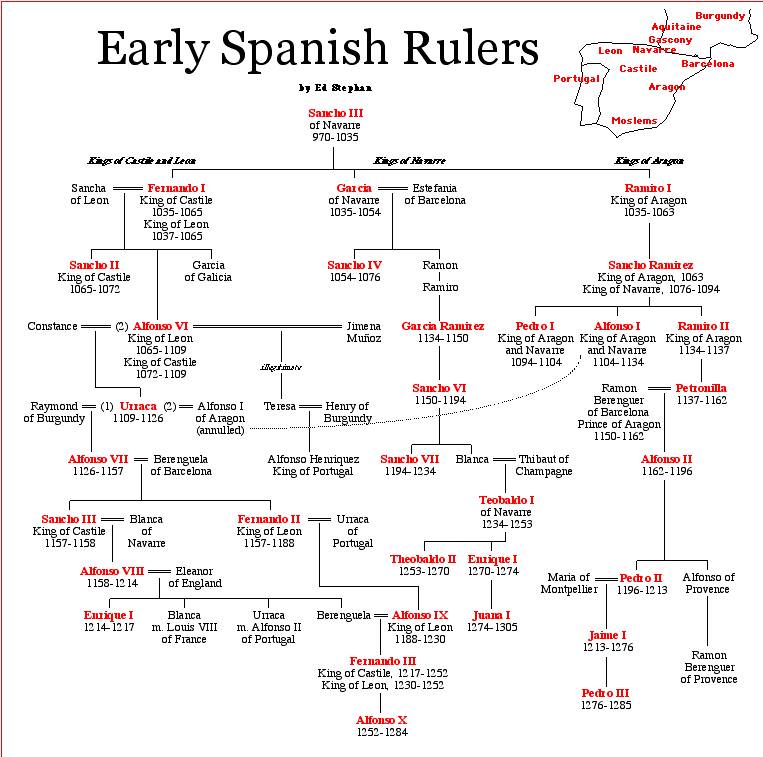
- Assumes throne in 1252 on death of his father, Fernando III el Santo
- Reign plagued by internal struggles with nobles and royal succession
(eldest son Fernando de la Cerda vs second eldest Sancho)
- Ambitions as Holy Roman Emperor through mother’s side
- Suffers grave illness during his life (cancer)
|
|
4
|
- Continuation of School of Translators in Toledo established under King
Fernando III el Santo
- Innovation: Translations of Arabic and Hebrew works into Castilian
rather than Latin
- Growth and prestige of Castilian as a language of culture, learning and
politics
- Continues repopulation and conquest of Al-Andalus
|
|
5
|
- Legislative
- Scientific (including astronomical and astrological)
- Recreational
- Prose works
- Poetic (religious and secular)
|
|
6
|
- Setenario (begun c. 1252 during reign of Fernando III) much of it
incorporated into the 1st Partida
- Siete Partidas (begun 1251; 1256-65) a vast law code that encompasses
every aspect of society
- El espéculo (1255) Five books (6th and 7th referred to, but never
compiled). Book I: law, doctrine of Trinity, articles of Catholic faith;
Books II -III: political and military organization of the kingdom; Books
IV-V: Justice
|
|
7
|
- 1st Duties of clergy and matters of dogma. Except title I, on law (what
it is, who has power to make laws and why, etc.)
- 2nd Emperors, kings & other lords: The rights & duties of those
who govern
- 3rd Justice and its administration
- 4th Matrimony, kinship, legitimate and illegitimate children, slavery
and freedom, etc.
- 5th Commercial law: loans, debts, contracts, and other forms of commerce and dealings
- 6th Wills, inheritance, guardianship of orphans and minors
- 7th Criminal Law: crimes, punishments, etc. Laws governing Jews, Moors
and heretics
|
|
8
|
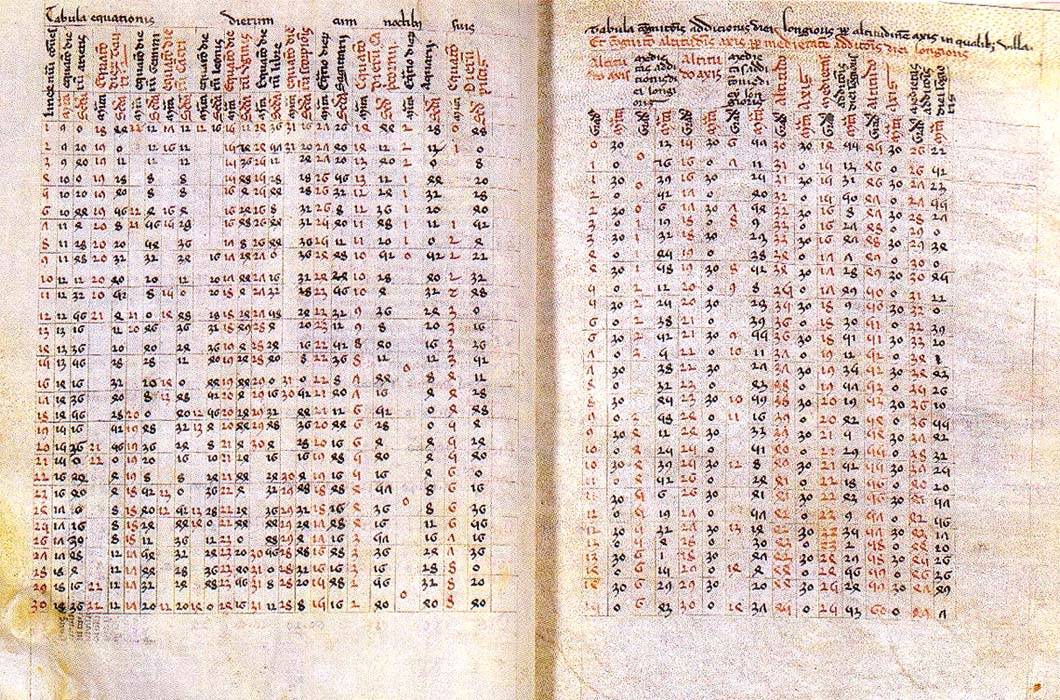
- Translations of astronomical texts include:
- Libro de las cruces (1259, 1270's)
- Libro de las Tablas Alfonsíes (1256-1277)
- Scientific works: together around 23 treatises
|
|
9
|
|
|
10
|
- Libros del saber de la astrología. (1276-1279) 16 treatises that attempt
to systematize the movements of the stars and constellations
- Astrological:
- Lapidario (1250/1279) the properties of stones and their relation to
the movement of the planets
- Magic:
- A version of the Liber Picatrix (1256), an 11th century Andalusian
treatise on talismanic magic
|
|
11
|
- General Estoria
- Oldest known vernacular universal
history. Begins at the creation up to the birth of the Virgin Mary
- Principle sources: the Bible, Josephus' Antiguedades judaicas and the Historia
Scholastica of Peter Comestor
- Secondary sources: classical writers (Ovid, Pliny, etc.) and Arabic
historians
|
|
12
|
- Estoria de España (Primera Crónica General)
- codices: E1 (1272) (from the first inhabitants to the arrival of the
Arabs [under the direction of Alfonso]) and E2 (1289) (continued under
Sancho IV, up to the reign of Fernando el Santo [1217-52])
- Primary sources: Rodrigo Jiménez de Rada (known as El toledano): De
Rebus Hispaniae (or Historia Gothica, 1242)
- Lucas de Tuy (known as El Tudense): Chronicon Mundi (1236)
- Other sources: Ovid, Lucan’s Pharsalia, classical historians and
geographers, epic poems, etc.
|
|
13
|
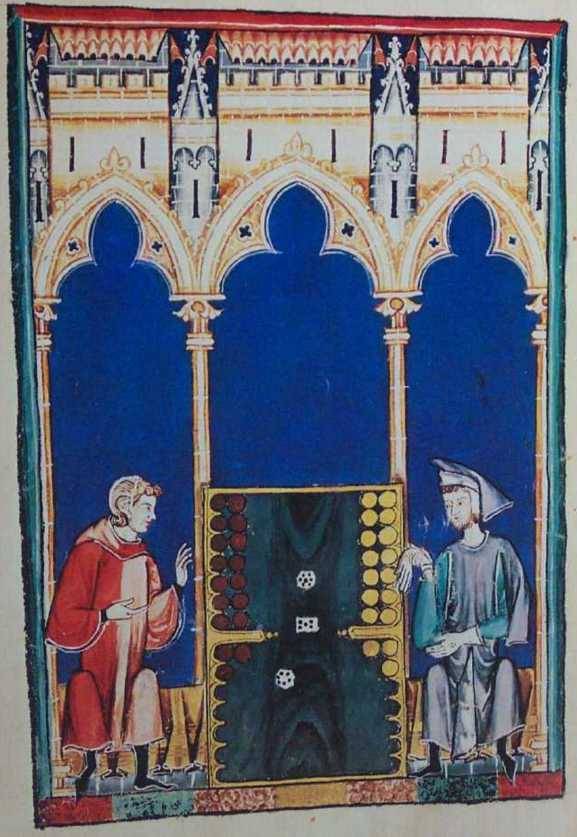
- El libro de Ajedrez, dados, e tablas
- Codex (T-1-6) Seville, 1283
- Three treatises on games (chess, dice and astronomical tables) from
Arabic texts
- 150 miniatures
|
|
14
|
- Calila e Digna (1251/2)
- Translation when Alfonso still a prince.
- First major work of Arabic didactic prose in the "tale within a
tale" framework widely disseminated in Spain.
- Derived from Hindu Panchatantra
|
|
15
|
|
|
16
|
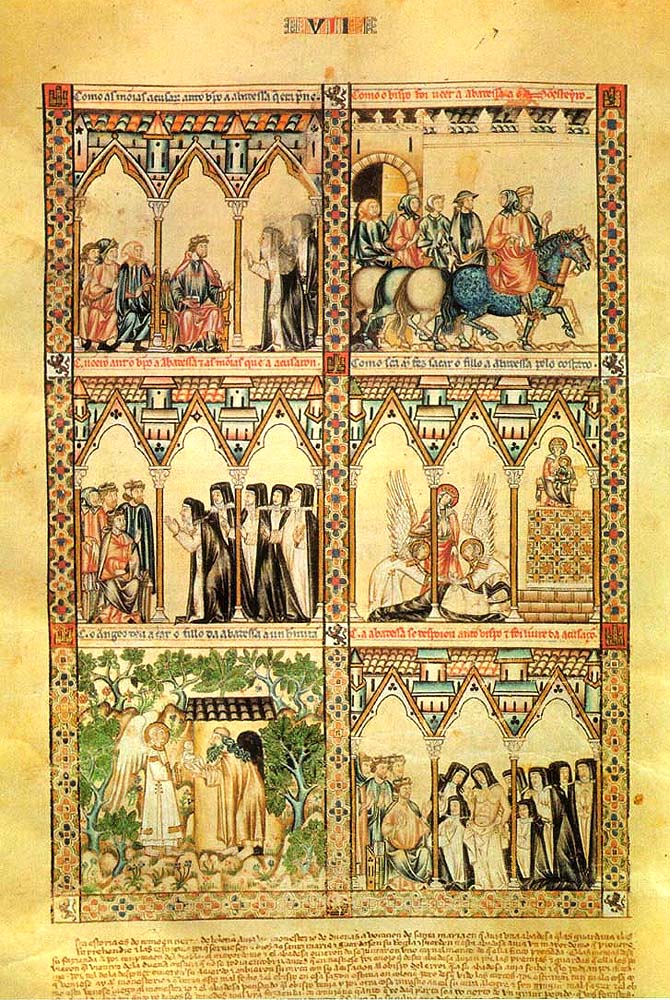
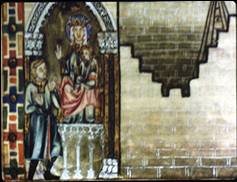
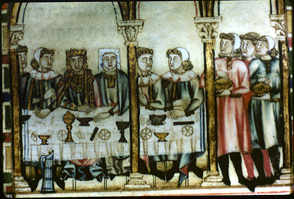
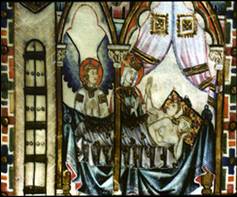
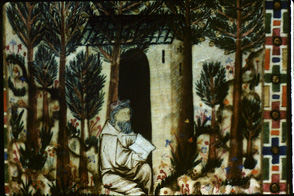
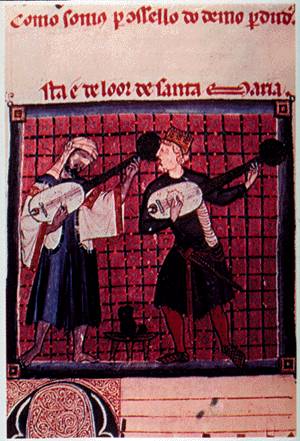
- Resource for depiction of daily life, interaction among groups
(Christians, Jews, Muslims; women)
- Historical resource: some cantigas show King Alfonso or members of his
family or historical events
- Rich source for musicologists, art historians and literary specialists
|
|
17
|
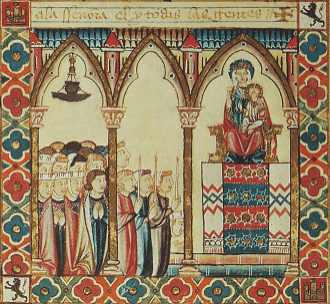
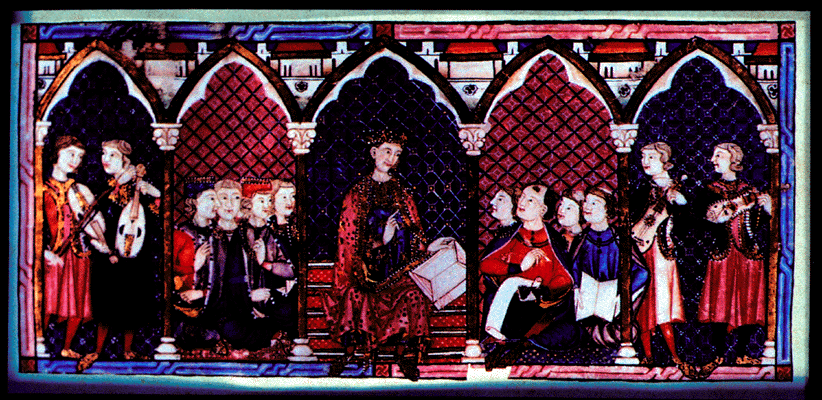
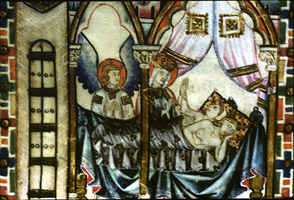
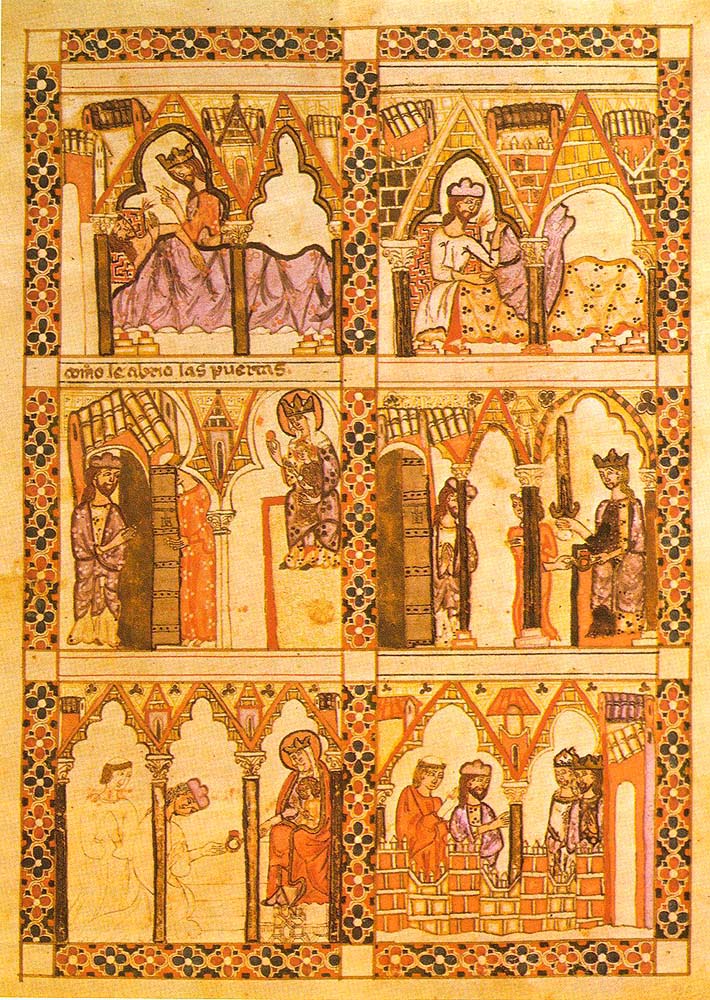
- Consists of narratives of Marian miracle tales collected from Europe and
Spain
- Musical notations
- Richly colored illustrations
- Every tenth cantiga is a lyric praise poem
|
|
18
|
|
|
19
|
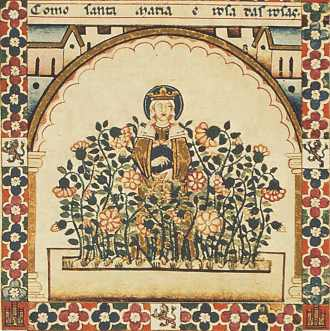
- Rose of roses and flower of flowers,
Lady of ladies, Lord of lords.
- Rose of beauty and fine appearance
And flower of happiness and pleasure,
lady of most merciful bearing,
And Lord for relieving all woes and cares;
Rose of roses and flower of flowers,
Lady of ladies, Lord of lords.
|
|
20
|
|
|
21
|
|
|
22
|
|
|
23
|
|
|
24
|
|
|
25
|
- Poetic texts of a satirical nature
- Example: "O qui foi passar a serra"
In 1264 the Moorish King of Granada raised a rebellion, but in
1265 Alfonso forced him to sign a truce at Vega. This cantiga de
escarnio (Satire) is directed against Spanish traitors who joined the
Moors.
|
|
26
|
- He who passed over the mountains
And did not want to serve on the plain--
Is he the one, when war was returned,
Who's now bragging?
Since he vacillates so much now,
Let him be damned!
- He who doled out his money
Without attracting any good knights--
Is it because he wasn't first in the fight
That he's bragging now?
Since he came at us with his rear,
Let him be damned!
|
|
27
|
- He who raised a great soldiery
But never quite a good cavalry,
Since he didn't go to Granada, is he
The one who's bragging?
Whether he's rich or has a strong band,
Let him be damned!
- He who loaded up his bags
With a little gold and a lot of guff,
And never quite entered the town of Vega,
Is he bragging now?
Since he's more like fat than butter,
Let him be damned!
- From: J.Wilhelm, ed. Lyrics of the Middle Ages, An Anthology. NY:
Garland, 1990, 243-44.)
|
|
28
|
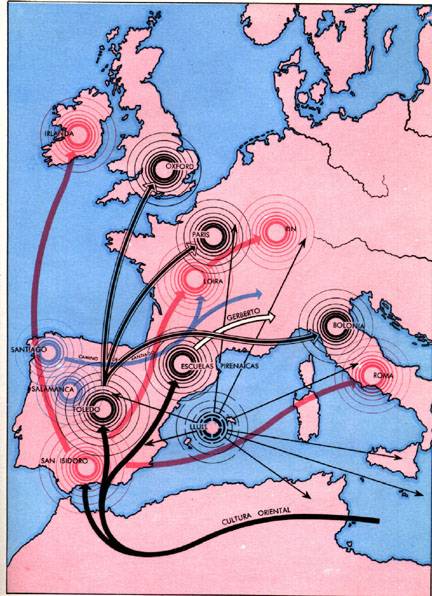
- Map from: http://faculty.washington.edu/petersen/alfonso/alfonsox.htm
|
|
29
|
|

 Notes
Notes